

At a Glance
Plaque, tartar and a tooth’s natural shade call for different approaches. Professional cleaning helps remove deposits and surface stains, but does not change the natural colour of teeth. During an examination, we will check your child’s teeth and gums and explain which areas need more attention when brushing.
Jump to a Section
What Is Yellow Plaque on a Child’s Teeth?
Dental plaque is a sticky film containing bacteria. It forms on tooth surfaces and needs to be removed regularly. Not all plaque is easy to see: its colour can be similar to that of the tooth. A yellowish line along the gums is a reason to review cleaning, but is not a diagnosis on its own.
After sugary foods or drinks, plaque bacteria produce acids that damage enamel. Repeated exposure increases the risk of tooth decay. Plaque also contributes to gum inflammation, so look beyond colour for bleeding, swelling and soreness.
| What we are comparing | How it differs |
|---|---|
| Soft dental plaque | A bacterial film removed by brushing and cleaning between teeth. |
| Tartar | Mineralised, hardened deposits that require professional removal. |
| Surface staining | Discolouration on the tooth surface that does not always come off with ordinary brushing. |
This table explains the differences but does not replace an examination. Plaque, tartar and staining can occur together in the same area.
Why Yellow Plaque Builds Up on Baby Teeth
Plaque builds up when areas are missed during cleaning. Your child may brush the front teeth well but miss the gumline or back teeth. A toothbrush alone cannot fully clean between teeth that touch. Brief brushing or skipping the bedtime clean also leaves bacterial film on the surface.
A young child needs an adult’s help. Being able to hold a toothbrush does not yet mean they can clean every surface. Frequent sugary snacks and drinks further increase the risk of tooth decay: bacteria receive sugar again and produce acids. This does not mean every yellow mark is caused by sweets.
Yellow Teeth Do Not Always Mean Plaque
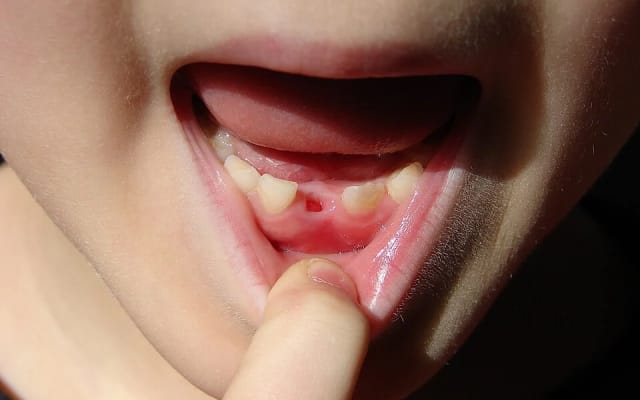
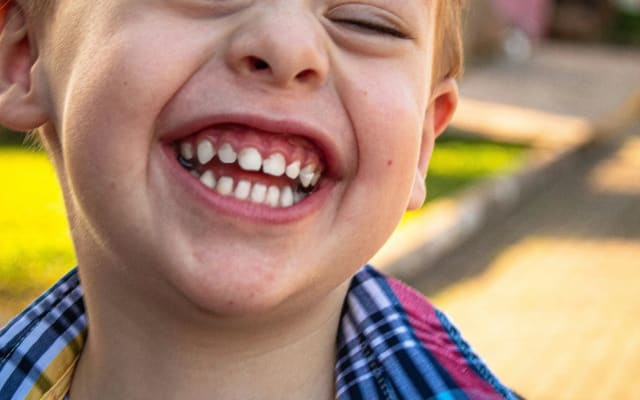
Permanent teeth may look yellower alongside baby teeth. This difference is often natural, particularly while teeth are being replaced. Brushing will not make a tooth’s natural shade match that of a neighbouring baby tooth.
Individual spots, a change in the colour of one tooth or darkening after an injury need a dental examination. Avoid brushing harder or starting whitening to remove something that may be a change within the tooth itself. A photograph or description cannot reliably distinguish all these causes.
Are deposits still there after brushing, or are you concerned about your child’s tooth colour?
Let’s start with an examination. Book an appointment or call +38 (068) 168-99-11.
When Professional Cleaning Is Needed
Yellow deposits do not mean every child needs the same procedure. First, we need to establish what has changed the surface colour and whether there are hardened deposits. Arrange an examination if:
- visible deposits remain after thorough brushing;
- you notice a dense line or build-up along the gums;
- the gums become red, swollen or bleed;
- there is pain, sensitivity, unexplained staining or a hole in a tooth.
If you are unsure what you are seeing, start with an examination by a pediatric dentist. We will check the teeth and gums and determine whether a change in daily care is enough or whether additional cleaning or treatment is needed.
Tartar in children is removed with professional instruments. Professional teeth cleaning also removes plaque and surface stains. The cleaning method is chosen according to the deposits and your child’s condition; the same combination of procedures is not needed for everyone.

Severe pain and pronounced gum swelling call for a more urgent dental appointment. A yellowish shade on its own, without other symptoms, is not a sign of an emergency.
What Happens During an Examination and Cleaning?
We first examine tooth surfaces and gums and ask about symptoms and your child’s usual care. If cleaning is needed, we choose a method for removing soft or hardened deposits. The approach for a child without tartar or surface stains may differ from the treatment of dense build-up.
Part of the appointment is showing you and your child how to clean missed areas. The interval between examinations is individual and takes account of the risk of tooth decay and gum disease. Tooth colour alone cannot determine a universal schedule for professional cleaning.
Keeping Teeth Clean After the Appointment
Professional cleaning does not replace daily care. Teeth need brushing twice a day with fluoride toothpaste, including before bed. An adult helps and checks the quality of brushing according to the child’s skills. We explain how to organise this in our article on brushing children’s teeth.
If the teeth touch closely, discuss cleaning between them with the dentist. Do not try to scrape off hardened deposits with sharp objects or lighten teeth with homemade mixtures. Whitening products for a child should also be discussed with a dentist first.
Sources
- American Dental Association. Plaque. MouthHealthy. https://www.mouthhealthy.org/all-topics-a-z/plaque
- AAPD. Policy on the Role of Dental Prophylaxis in Pediatric Dentistry. Revision 2024; Reference Manual 2026–2027, pp. 109–111. https://www.aapd.org/globalassets/media/policies_guidelines/p_prophyl-axis26.pdf
- NHS. Children’s teeth. https://www.nhs.uk/live-well/healthy-teeth-and-gums/taking-care-of-childrens-teeth/
- NHS. Gum disease. https://www.nhs.uk/conditions/gum-disease/
- NHS. Tooth decay. https://www.nhs.uk/conditions/tooth-decay/
- American Academy of Pediatrics. Consider Your Child’s Age Before Trying Tooth Whitening Products. HealthyChildren.org. Updated 20 October 2026. https://www.healthychildren.org/English/healthy-living/oral-health/Pages/Consider-Childs-Age-Before-Trying-Tooth-Whitening-Products.aspx
Images
- Clinical example of tartar in a 12-year-old child: Figure 3 from Cirillo E., Ciribè M., Putrino A., Vanacore S., Litta F. P., Galeotti A. The Management of a Post-Extraction Gingival Lesion in a Paediatric Patient: A Case Report. Children. 2025;12(10):1331. Original: MDPI. License: CC BY 4.0. Changes: reduced from 2634×1594 to 1280×775 and saved as WebP.
- Cover: a dentist examining a child’s teeth. Author: Ivan Babydov. Original: Pexels. License: Pexels License. Changes: cropped to 4:3 and 16:10, saved as WebP.

Article author: Aliona Kyrychok
pediatric dentist, experience 6 years
More about the doctor and bookingFAQ
Why does my two-year-old have yellow plaque on their teeth?
How can yellow plaque be removed from teeth?
Can tartar form on baby teeth?
Does a yellow colour mean my child has tooth decay?
Will professional cleaning make teeth white?
How often does a child need professional cleaning?
This article is for information only and does not replace a consultation. See a dentist for diagnosis and treatment.