
Does a tooth hurt, are your gums bothering you, or has it simply been a long time since your last check-up? Start with a consultation. At the appointment the dentist will examine your teeth and gums, listen to your complaints and explain what to do next.
Not every patient can say exactly which tooth hurts and why. Sometimes it is a reaction to cold, sometimes discomfort when chewing, bleeding gums or an old filling that suddenly started to get in the way. Sometimes it is simpler: nothing bothers you, but it is time to have your teeth checked.
This is exactly what an initial dental consultation is for. The dentist works out the situation, carries out an examination and explains what to do next. If treatment is not needed, the dentist will say so too.
Talking Before the Examination
The appointment begins with your complaints. The dentist asks when the unpleasant sensations appeared, what triggers them and how long they last. The answers narrow down the possible causes even before the examination.
The dentist then takes your medical history: allergies, chronic conditions, regular medication and any previous reaction to anaesthesia. This is not a formality. For example, medicines that affect blood clotting must be taken into account before a tooth extraction or another procedure.
Are you afraid of dentists? Say so openly. Some people feel better when the dentist comments on every step, while others are calmer without extra detail. This can be discussed in advance.
What the Dentist Checks
During the examination the dentist assesses the teeth, fillings, gums, mucous membrane and bite. Attention is paid to caries, cracks, chips, inflammation, tooth mobility and areas under excessive chewing load.
The whole mouth is checked, not just the place the patient points to. Pain sometimes radiates from a neighbouring tooth, so without a full examination it is easy to be mistaken about its source.
The dentist then tells you what they have seen. What needs treatment soon? What can simply be monitored? Is there an old filling that is holding for now but has already lost its seal? The answers should be clear to the patient, not just to the dentist.
When an X-ray Is Needed
An X-ray or another additional test is not done at every appointment. The dental examination comes first. If the cause of the problem cannot be seen without an image, the dentist will explain which test is needed and why.
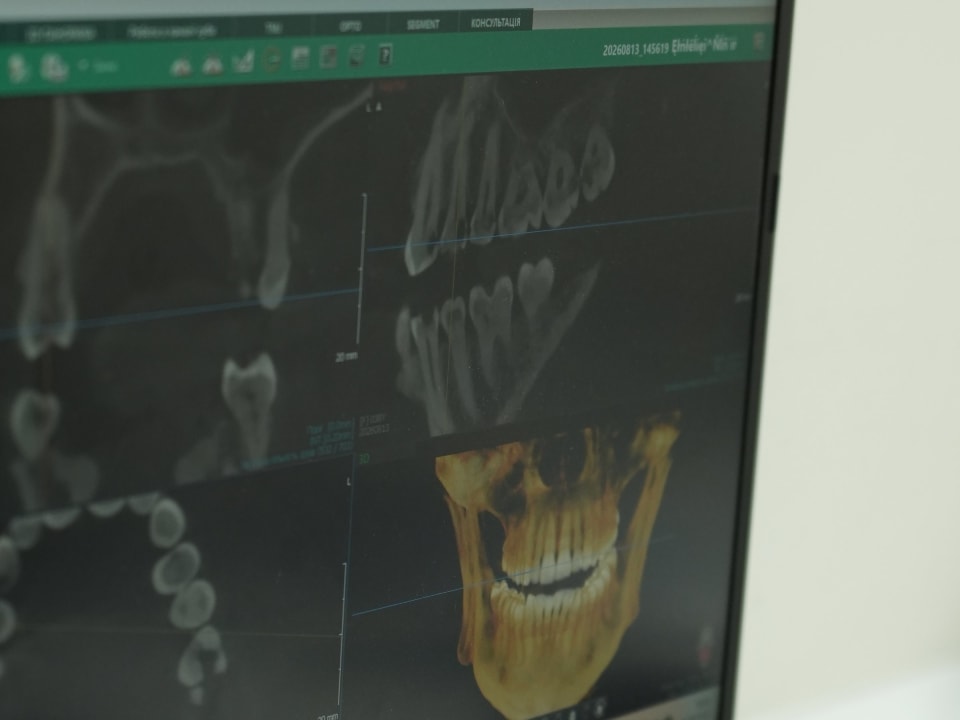
An X-ray can show the condition of the roots and canals, changes near the tip of the root, hidden caries or a problem under an old restoration. Orthodontic or prosthetic treatment may require other digital investigations. For example, 3D scanning of the teeth gives a digital model of the jaws without the usual impressions.
Tests are ordered when indicated. There is no need to do everything at once “just in case”.
Treatment Planning
If several problems are found, the dentist sets priorities. Acute pain and inflammation need attention first. After that the dentist can deal with caries, replacing leaking fillings, gum treatment or replacing lost teeth.
A treatment plan can be very short – for example, one filling and professional cleaning. In a more complex situation it covers several stages and consultations with specialist dentists. What cannot wait goes into the plan first. The remaining procedures are spread over later appointments at a pace convenient for the patient.
Sometimes the dentist can suggest not one but two ways of treating a problem. In that case the consultation covers the features of each, the timing and the expected result. The final decision is made together with the patient.
Booking a Dentist in Bila Tserkva
Acute pain is not the only reason to see a dentist. Early caries, a loose filling margin or gum irritation may not yet cause noticeable symptoms. A routine examination often picks up such changes earlier.
Current prices for consultations with different specialists are in the “Prices” block below and in the price list.


