
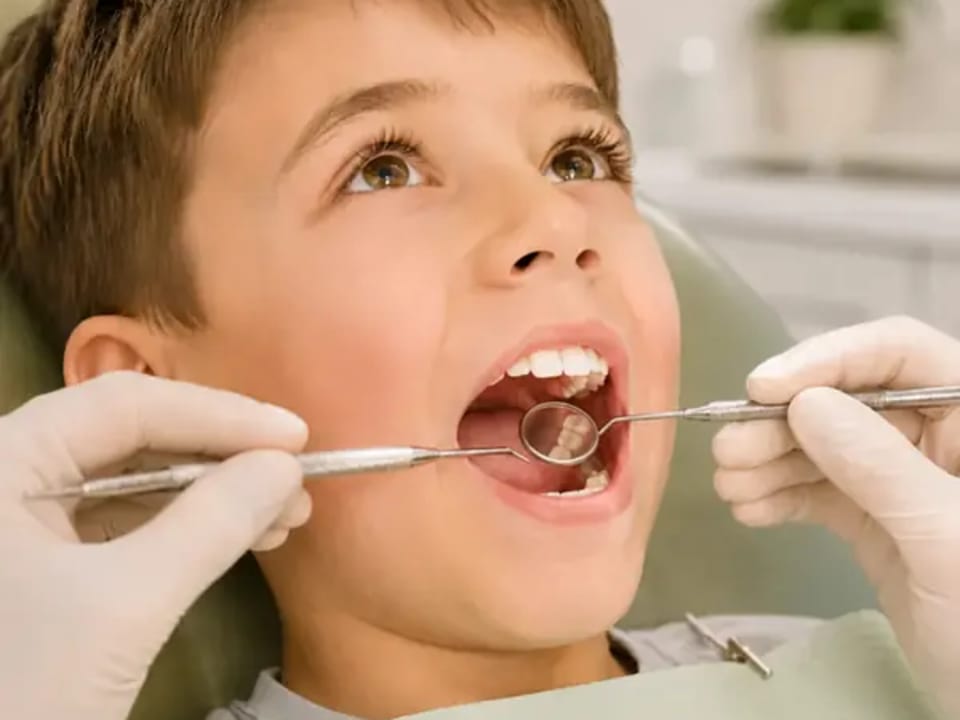
A chalky strip by the gum can be decay. So can a brown groove or one stubborn place where food catches every evening. Pain may be absent. With us, pediatric cavity treatment in Bila Tserkva begins by checking the surface of the tooth, the depth of the damage and the tissues underneath.
A Small Mark Can Hide a Wider Cavity
Caries does not always start as a black hole. Early enamel often loses its shine first and turns matte white. Later, the surface can become rough or break open.
Baby teeth leave decay a short route to the pulp. Their hard outer tissues are thinner, while the chamber in the middle is relatively large. A mark that appears minor from above may spread sideways through dentine.
This is why the dentist may recommend an X-ray even when the child says nothing hurts. Decay between two teeth is particularly good at staying out of sight.
A Milk Tooth Still Has Work to Do
A tooth already wobbling at the expected age is one story. A firmly seated molar in a three-year-old is another. That molar still helps with chewing and keeps a place for the permanent tooth beneath it.
Early baby tooth decay treatment may involve a modest restoration. Wait until the cavity reaches the pulp, and the choices become less modest: pulp treatment, a crown or sometimes extraction.
The age of the child matters, but so do the remaining walls of the tooth and the timing of its natural replacement. "It will fall out anyway" is not a treatment plan by itself.
Drilling Is Not Always the First Step
No hole in the enamel? Then the dentist may hold off on drilling. A white-spot lesion can sometimes be slowed or arrested through fluoride, better plaque removal, fewer repeated sugar exposures and close review.
A true cavity is different. Softened tissue has to be cleared, and the lost part of the tooth needs rebuilding. The choice of material for pediatric dental fillings depends on where the defect sits, whether the area can be kept dry and how much chewing force it receives.
With deep decay, the pulp is close. Removing every dark trace can expose it, so the dentist works according to the condition of the dentine rather than colour alone. Night pain, swelling or a pus-filled spot beside the tooth points to a different problem; a simple filling will not solve pulpitis.
In other words, caries treatment for children may mean monitoring, stopping an early lesion, placing a filling or moving to pulp therapy. The same label covers very different teeth.
Do Not Miss the Six-Year Molar
The first permanent molar slips into the mouth behind the baby teeth, usually at about six. Nothing falls out beforehand. Parents often assume it is temporary.
Its chewing surface has narrow grooves where plaque sits stubbornly, especially while a child is still learning to reach the back with a toothbrush. A small cavity can be restored locally. For deeper damage, the dentist also considers that the root may still be developing.
What Treatment Day Feels Like
First comes a look and a conversation. One child wants the dentist to explain every instrument; another prefers a quick agreement that a raised hand means "stop for a moment".
Local anaesthetic is used when the depth of treatment calls for it. Once the tooth is comfortable, the decayed area is cleaned and the missing shape is restored.
For cavity fillings for children, the bite check is not a formality. The child closes onto thin coloured paper, which marks a spot if the new filling sits a little too high. That spot can then be adjusted.
One uncomplicated cavity often fits into a single visit. Several teeth or a tired young patient may be better handled in shorter appointments.
If your child is very frightened or cannot sit calmly in the chair, the dentist may suggest nitrous oxide sedation or dental treatment under general anesthesia. Our general approach to treating young patients is described on the pediatric dentistry in Bila Tserkva page.


