

At a Glance
Have you noticed a white spot on your child's baby tooth or permanent tooth? It may be a sign of early tooth decay, a developmental enamel defect or dental fluorosis. Colour alone cannot tell you the cause, even if the tooth does not hurt.
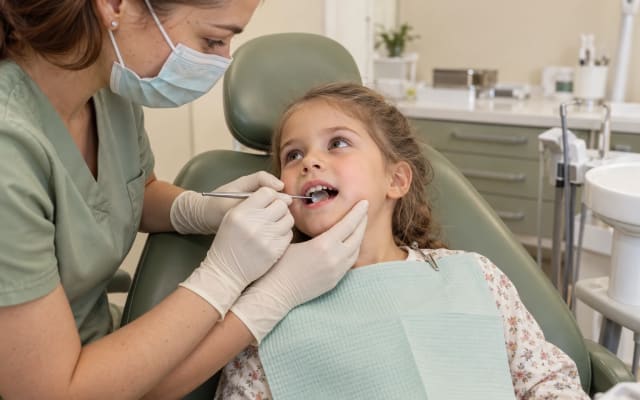
At Tooth Fairy, we recommend having the area checked by a pediatric dentist. After an examination, the dentist will explain whether the tooth needs treatment, protection or monitoring. Until the appointment, continue your usual dental care and do not try to whiten or scrape away the spot.
Jump to a Section
- What White Spots on Teeth Can Look Like
- Why White Spots Appear
- White Spots on Baby Teeth and Children's Permanent Teeth
- Enamel Hypoplasia in Children
- What Is Molar-Incisor Hypomineralization?
- Which Changes Should Parents Notice?
- What to Do If You Notice a White Spot
- How to Treat White Spots on a Child's Teeth
- When to Arrange an Earlier Appointment
- How to Reduce the Risk of New Spots
What White Spots on Teeth Can Look Like

A white spot may be a small pale mark, a matt, chalky line near the gum or a larger area that looks different from the rest of the tooth. Spots can affect one tooth or several. They may develop gradually or be visible as soon as a tooth comes through.
A lack of pain does not mean the change can be ignored. Early decay often causes no discomfort, while weakened enamel may become sensitive later. However, not every white spot is tooth decay or needs a filling.
Why White Spots Appear
Different conditions can look similar. The dentist considers when the spot appeared, which teeth are affected, and whether there is plaque, sensitivity or surface damage.
Possible Causes of White Spots
| Possible cause | What it means |
|---|---|
| Early tooth decay | Acids produced by plaque bacteria cause enamel to lose minerals. At this stage, a white spot may appear before a visible cavity forms. |
| Enamel hypoplasia | Less enamel formed while the tooth was developing. Alongside colour changes, the tooth may have pits, grooves or thinner areas. |
| Hypomineralization | The enamel developed with reduced strength. Affected areas may differ in colour, feel sensitive or be more likely to chip. |
| Dental fluorosis | Changes result from excessive fluoride ingestion while the teeth are forming. Pale flecks, spots or lines may appear. |
This table explains possible causes; it is not a way to diagnose a spot at home. Similar-looking changes can require different approaches.
White Spots on Baby Teeth and Children's Permanent Teeth
If the Spots Affect Baby Teeth
White spots on baby teeth may be related to early decay or developmental enamel changes. Chalky areas near the gumline, where plaque can collect, are particularly important to have checked.
If you notice white spots on your one-year-old's or two-year-old's teeth, do not wait for them to complain of pain. At this age, parents should brush their child's teeth. A dentist can check your technique and help you choose a suitable toothpaste. Baby teeth need protection even though they will eventually fall out.
If the Spots Affect Permanent Teeth
White spots on children's permanent teeth may be visible as the teeth erupt or develop later. The dentist will check for a developmental enamel defect, early decay or another cause. If a newly erupted tooth is sensitive or chipping, arrange an examination promptly.
Enamel Hypoplasia in Children
Enamel hypoplasia means that not enough enamel formed while a tooth was developing. The surface may have pits, grooves or thinner areas. These defects can be accompanied by colour changes, but a white spot alone does not confirm enamel hypoplasia.
This does not mean your child has been brushing poorly. Daily care helps protect vulnerable areas from decay, and the dentist can restore defects when necessary.
What Is Molar-Incisor Hypomineralization?
Molar-incisor hypomineralization, or MIH, is a developmental enamel condition affecting one or more first permanent molars. The incisors may also be affected.

Teeth may have clearly defined white, cream, yellowish or brown areas. Some children find brushing, cold foods or chewing uncomfortable, and weakened enamel may begin to chip.
MIH develops while enamel is forming, so it cannot be explained simply by inadequate brushing. If you notice a spot on a newly erupted permanent tooth, book an examination so the dentist can assess its strength and whether it needs protection.
Which Changes Should Parents Notice?
Before the appointment, try to recall when you first noticed the change. Earlier photographs of your child's teeth may help show whether the appearance has changed.
- Was the spot present when the tooth erupted, or did it appear later?
- Does it affect one tooth or several?
- Is its size or colour changing?
- Does your child report sensitivity when eating or brushing?
- Are there chips, visible pits or areas where food gets trapped?
Do not test the surface with a needle, toothpick or another sharp object. A dentist should assess its texture and condition.
What to Do If You Notice a White Spot
First Steps for Parents
- Book a dental examination, even if the tooth does not hurt.
- Continue gentle brushing twice a day with an age-appropriate amount of fluoride toothpaste.
- Limit frequent sugary snacks and sweet drinks between meals.
- If possible, take a clear photograph in daylight to record the appearance before the appointment.
Do not apply lemon juice, baking soda, whitening strips or concentrated products without professional advice.
Do not stop using fluoride toothpaste simply because you suspect fluorosis. Fluoride sources, the amount swallowed and the stage of tooth development all matter. Your dentist can help you choose a suitable care routine.
For home care advice and toothpaste amounts by age, see our article on how to brush children's teeth.
How to Treat White Spots on a Child's Teeth

Treatment addresses the cause, so no single procedure is suitable for every white spot. After cleaning and examining the tooth, the dentist assesses whether decay is present, how strong the enamel is and whether treatment is needed.
If the Cause Is Early Tooth Decay
If a cavity has not formed, the dentist may recommend changes to brushing and diet, professionally applied fluoride and follow-up examinations. The aim is to stop mineral loss and prevent the lesion from progressing. The affected area may still remain a different colour.
If the surface has already broken down, your child may need cavity treatment to restore the tooth.
If There Is a Developmental Enamel Defect
The dentist selects measures to reduce sensitivity and protect against decay and further chipping. Depending on the tooth's condition, these may include protective coatings, sealants on chewing surfaces or restoration of damaged areas.
If Appearance Is a Concern
For selected spots, the dentist may consider resin infiltration or microabrasion, a controlled treatment of the outer enamel surface. These options are considered after diagnosis, taking into account the child's age, the cause and the depth of the change. Home whitening is not a treatment for white spots on a child's teeth.
When to Arrange an Earlier Appointment
A white spot without other symptoms is usually not a medical emergency, but it should still be assessed. Contact a dentist sooner if:
- the tooth hurts or is very sensitive when eating or brushing;
- enamel is chipping or a cavity has appeared;
- the spot is growing or darkening quickly;
- your child has difficulty chewing;
- the gum or cheek becomes swollen.
Facial swelling with fever requires urgent assessment. If your child has difficulty breathing or swallowing, seek emergency medical care.
How to Reduce the Risk of New Spots
Regular care helps reduce the risk of decay-related spots and protect weakened enamel. However, brushing cannot reverse a defect that developed while the tooth was forming.
- Brush twice a day and help your child clean areas that are difficult to reach.
- Use suitable fluoride toothpaste and supervise the amount applied.
- Offer water between meals and reduce frequent sugary and acidic drinks.
- Attend check-ups as often as your dentist recommends.
At an appointment with a pediatric dentist at Tooth Fairy in Bila Tserkva, you can have the spot assessed, discuss home care and receive a treatment or monitoring plan.
Sources
- Campos PH et al. Prevalence of White Spot Caries Lesions in Primary Teeth in Preschool Children: Systematic Review and Meta-analysis. 2022.
- Lopes LB et al. The prevalence of molar-incisor hypomineralization: a systematic review and meta-analysis. Scientific Reports. 2021.
- American Academy of Pediatric Dentistry. Molar-Incisor Hypomineralization.
- Centers for Disease Control and Prevention. About Dental Fluorosis.
- FDI World Dental Federation. Oral Health Training Manual: White spots/hypomineralization.
- Inchingolo AM et al. Treatment Approaches to Molar Incisor Hypomineralization: A Systematic Review. Journal of Clinical Medicine. 2023;12(22):7194. Figure 1.
Images in this article: white areas on front teeth — josconklin, CC BY-SA 3.0, Wikimedia Commons; clinical examples of hypomineralization — Angelo Michele Inchingolo et al., CC BY 4.0, original publication, Figure 1. Both images resized and converted to WebP. Child’s dental examination before treatment planning — Nenad Stojković (Shixart1985), CC BY 2.0, Wikimedia Commons. Resized and converted to WebP.

Article author: Aliona Kyrychok
pediatric dentist, experience 6 years
More about the doctor and bookingFAQ
Are white spots on a child’s teeth always tooth decay?
What should I do if white spots appear on my one-year-old’s or two-year-old’s teeth?
Can a white spot disappear on its own?
What is enamel hypoplasia in children?
Should I stop using fluoride toothpaste?
When is an urgent dental examination needed?
This article is for information only and does not replace a consultation. See a dentist for diagnosis and treatment.