

Contents
- 1.Why a Child May Have Tooth Pain
- 2.What to Do Before the Dental Visit
- 3.Can a Child Take Ibuprofen or Paracetamol?
- 4.What Not to Do
- 5.When to See a Dentist Soon
- 6.When Urgent Help Is Needed
- 7.Are Antibiotics Needed for Tooth Pain?
- 8.How the Dentist Finds the Cause
- 9.How to Prepare a Child for an Urgent Visit
- 10.How to Reduce the Risk of Recurrent Pain
- 11.Sources
If your child has a toothache, first check how they are feeling, help ease the pain temporarily and contact a dentist. Possible causes include tooth decay, inflammation inside the tooth, an injury or food trapped between teeth. Your child’s symptoms alone may not explain what is wrong.
At Tooth Fairy, we recommend arranging an examination even if pain medicine helps. Home care can make your child more comfortable while waiting for an appointment, but it does not replace dental treatment.
If your child has difficulty breathing or swallowing, or swelling spreads to the neck or around the eye, seek emergency medical care immediately.
Why a Child May Have Tooth Pain
Children cannot always point to the painful tooth or describe how it feels. Instead, they may refuse food, chew on one side, touch their cheek or wake up during the night.
Toothache in children can have several causes:
Tooth decay. The tooth may hurt with sweet or cold foods, or when food enters a cavity.
Pulp inflammation. The pulp is the soft tissue inside the tooth containing nerves and blood vessels. Pain may start without an obvious trigger, last for a long time or wake your child at night.
Inflammation around the root. This may cause pain when biting, swelling or a pimple-like bump on the gum.
An injury or chipped tooth. Pain may follow a fall, a blow to the mouth or biting something hard.
Irritated gums or trapped food. Your child may feel as though the pain comes from a tooth.
Teething. Erupting teeth can cause gum discomfort, but severe, persistent pain or facial swelling should not be dismissed as teething.
Before the appointment, note when the pain started, what makes it worse and whether your child has had an injury, fever or swelling. This information will help the dentist assess the problem.
What to Do Before the Dental Visit
When your child is crying with tooth pain, a clear sequence of steps can help.
Reassure your child and check their general condition. Look for fever, swelling or difficulty swallowing or breathing.
Gently look inside the mouth under good lighting. Check for a chipped tooth, a visible cavity, redness or swollen gums. Do not press on the painful area or probe a cavity with a sharp object.
Brush gently with a soft toothbrush. Avoid scrubbing the painful area or forcing your child to tolerate discomfort.
Offer soft food at a comfortable temperature and water. Avoid very hot, cold, sweet or hard foods for now.
If there is swelling, briefly apply a cool compress to the outside of the cheek through a cloth. Do not place ice directly on the skin or delay seeking care.
If needed, give a pain medicine suitable for your child. Follow the instructions for the specific product.
Contact a dentist. Describe the symptoms so the dental team can advise how urgently your child needs to be seen.
If your child develops a toothache at night, home care should only be a temporary measure. Seek urgent dental care if the pain is severe and cannot be adequately relieved.

Can a Child Take Ibuprofen or Paracetamol?
Ibuprofen or paracetamol, also called acetaminophen, may provide temporary relief when suitable for your child’s age and health. The choice also depends on any medicines your child has already taken.
The dose must follow your child’s weight, age and the instructions for the specific product. Children’s liquid medicines come in different concentrations, so the same number of millilitres may contain different amounts of medicine.
Before giving a medicine:
check the active ingredient and concentration;
make sure another medicine already given does not contain the same active ingredient;
follow the required intervals between doses and the maximum daily dose;
do not combine or alternate medicines without a clear plan from a healthcare professional.
Ibuprofen is not suitable for every child. For example, do not give it to a child who is dehydrated or has chickenpox unless a doctor recommends it. If your child has a chronic condition, allergies or a previous reaction to pain medicine, ask a doctor or pharmacist which option is appropriate.
Do not give aspirin to a child unless prescribed by a doctor. Do not use codeine or tramadol to treat your child’s toothache yourself. If the medicine does not help, seek professional advice rather than increasing the dose.
What Not to Do
Avoid home remedies that may damage the gums or complicate treatment.
Do not place a tablet or part of one directly on the tooth or gum. It can irritate or burn the tissue.
Do not heat the cheek or use hot compresses.
Do not puncture swelling or a pimple-like bump on the gum.
Do not apply alcohol, garlic, essential oils or other irritating substances.
Do not try to remove the painful tooth yourself.
Do not give antibiotics left over from previous treatment.
Do not postpone an appointment simply because the pain has stopped.
Baby tooth pain also needs a dental assessment. Do not assume the problem will resolve because the tooth will eventually fall out.
When to See a Dentist Soon
Book the earliest available appointment if the pain keeps returning, the tooth reacts to food or drinks, there is a visible cavity or your child avoids chewing on one side.
Contact a dentist the same day if the pain is severe, wakes your child at night, prevents eating or is not relieved by suitable pain medicine. Do the same if there is swelling or a pimple-like bump on the gum, or if the tooth started hurting after an injury.
A painful baby tooth also needs assessment. The dentist will consider whether it can be saved and what treatment is appropriate, taking into account the tooth and roots, your child’s age and how soon the tooth is expected to fall out naturally.
When Urgent Help Is Needed
Seek urgent dental care if tooth pain is accompanied by cheek or facial swelling, fever, unusual tiredness or difficulty opening the mouth. Do not wait for a routine appointment. If a dentist is unavailable, seek urgent medical care.
Seek emergency medical care immediately if:
your child has difficulty breathing, swallowing or speaking;
your child cannot swallow their saliva;
swelling spreads to the neck or around the eye;
swelling increases rapidly and your child’s general condition worsens.
Do not wait for pain medicine to work or for an appointment to become available.
Are Antibiotics Needed for Tooth Pain?
Tooth pain alone does not mean your child needs an antibiotic. For example, inflammation inside a tooth usually requires dental treatment to address the cause.
Antibiotics may be needed when an infection is spreading or causes general symptoms such as fever and worsening health. A clinician decides whether to prescribe them after assessing your child.
Antibiotics do not replace treatment of the affected tooth. Do not start them yourself or use medicine prescribed for another family member.
How the Dentist Finds the Cause
The dentist will ask about the symptoms, examine the teeth and gums, and check the painful area. If an X-ray is needed, they will explain why.
Treatment depends on the cause of the pain. If the damage is limited to the hard tissues of the tooth, cavity treatment for children and restoration of the affected area may be enough. If inflammation involves the tissue inside the tooth, the dentist will consider pulpitis treatment for children.

After an injury, the tooth may need restoration and follow-up monitoring. If it cannot be saved, the dentist will explain why removal is recommended and what care is needed afterwards.
At Tooth Fairy in Bila Tserkva, you can arrange an appointment with a pediatric dentist. The dentist will explain what is causing the pain, discuss the treatment options and advise you on care after the visit. When booking, tell the team if your child has swelling, fever or severe pain.
How to Prepare a Child for an Urgent Visit
Keep your explanation simple: “We’re going to the dentist so they can look at your tooth and help you.” Avoid detailed descriptions of instruments or promises that your child will feel nothing.
Bring a favourite toy if it helps your child feel calmer. Prepare information about allergies, chronic conditions and medicines already given, including the name, dose and time of the last dose.
If your child has had a difficult dental experience before, tell the dentist before the examination.
How to Reduce the Risk of Recurrent Pain
Daily care and timely check-ups help identify problems before severe pain develops.
Brush your child’s teeth twice a day with an age-appropriate amount of fluoride toothpaste.
Help with brushing until your child can clean all tooth surfaces thoroughly.
Limit frequent sugary snacks and sweet drinks between meals.
Attend preventive check-ups as recommended by the dentist.
Arrange an examination if you notice a spot, cavity, chip or sensitivity.
Sources
American Dental Association. Acute dental pain management guideline: pediatric recommendations.
American Academy of Pediatric Dentistry. Acute Pain Management for Pediatric Dental Patients.
American Academy of Pediatric Dentistry. Use of Antibiotic Therapy for Pediatric Dental Patients.
NHS. Toothache.
NHS. Ibuprofen for children.
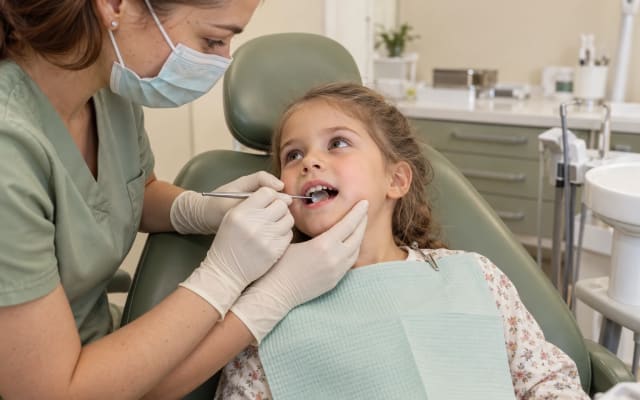
Image in this article: dental examination — stepper123, Public domain, Wikimedia Commons. Image resized and converted to WebP.

Article author: Aliona Kyrychok
pediatric dentist, experience 6 years
More about the doctor and bookingFAQ
What should I do at home if my child has a toothache?
How can I ease toothache in children before an appointment?
What should I do if a baby tooth hurts?
Can I apply heat to my child’s cheek?
Can I give my child an antibiotic for tooth pain?
Does my child still need a dentist if the tooth stops hurting?
This article is for information only and does not replace a consultation. See a dentist for diagnosis and treatment.