
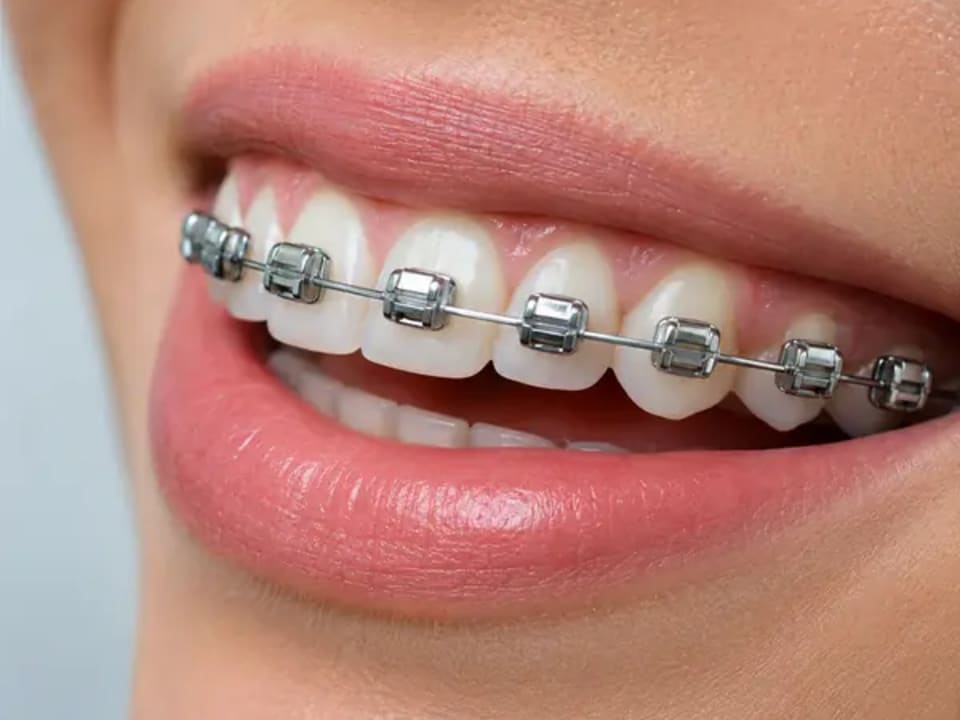
“Self-ligating” is one of those dental terms that sounds more dramatic than the mechanism really is. It tells us one small but useful thing: the wire sits behind a door built into each bracket. These braces do not adjust the treatment while the patient sleeps. The orthodontist is still very much involved.
What Is Hiding Behind the Bracket Door?
Take a standard ligated bracket. Its slot receives the archwire, and a tiny elastic ring or a fine piece of wire is wrapped around the bracket to keep everything together. On a self-ligating braces system, that extra tie disappears. A hinged or sliding part of the bracket closes over the slot instead.
During a review visit, the doctor releases those little doors, works with the archwire and clicks the brackets shut again. That is all the name describes. It does not mean that the appliance decides when a tooth has moved far enough or changes its own settings between visits.
The moving force still comes mainly from the archwire. It presses in planned directions; the bone and tissues around the roots respond over time. A later stage may call for a different wire, elastics or another orthodontic element. The bracket door holds. The doctor decides.
Ligated and Self-Ligating: What Actually Changes?
Look at the face of the bracket. A ligated system has a small tie wrapped around it. A self-ligating bracket has a lid or sliding gate over the wire slot.
Changing a wire can be a little less fiddly when the orthodontist is opening doors rather than removing a ring from every bracket. That practical detail should not be confused with “no more appointments”. At each visit, the doctor needs to see whether a tooth has turned as expected, whether the bite is developing correctly and whether the gum beside the bracket remains healthy. A clip answers none of those questions.
Nor does the clip promise a dramatically shorter calendar. Two patients may wear identical brackets yet require very different treatment times. One needs several rotations corrected; the other needs space management and a substantial bite change. Biology does not read the product label.
Metal or Ceramic?
Self-ligating metal braces have a visible metal body. Their compact mechanism is practical where reliable control matters more to the patient than hiding the appliance.
A patient asking about self-ligating ceramic braces is choosing two characteristics at once. “Ceramic” refers to the pale, less contrasting body of the bracket. “Self-ligating” refers to the clip over its wire slot. The archwire can still be metal, so the finished appliance will be discreet rather than invisible.
Material and closing mechanism answer different questions. A ceramic bracket may use an ordinary elastic tie. A metal bracket may have a built-in door. Which pairing suits the patient depends on the movements the orthodontist has planned, not simply on which sample looks best in the hand.
What Do They Look Like on Teeth?
There is still a line of brackets joined by an archwire. The noticeable difference is the front of each bracket: instead of a separate elastic ring, there is a small door.
No ligatures does not mean no rubber bands of any kind. Interarch elastics may still be prescribed later. They stretch between hooks on the upper and lower braces to alter the bite, so their job has nothing to do with keeping the wire inside the bracket.
Fitting Day
First come records: photographs, a bite assessment, scans or impressions and the required X-rays. The visible crowns show only part of the case. Root direction and bone support can change what appears possible from a smile photograph.
Cavities and active gum inflammation are managed before fitting. The teeth may also need professional cleaning. Once the mouth is ready, each bracket is bonded to a measured position on the enamel.
For modern self-ligating braces, the doctor then opens the small clips, lays the first archwire into the slots and closes them. No healthy tooth structure is carved away for the brackets.
The teeth often feel normal while the appliance is being placed. Pressure may arrive later, perhaps during the first proper meal. A bracket edge can also catch the cheek until the mouth toughens slightly. Softer food and orthodontic wax are useful for this short adjustment period.
Cleaning Has Not Become Automatic
A missing elastic tie means one less separate part around a bracket. It does not mean plaque has nowhere to hide. The gumline, the space beneath the wire and the sides of each bracket still need attention.
An orthodontic brush handles the broad surfaces. A single-tuft brush can trace the bracket edges, while an interdental brush passes under the archwire. A water flosser removes loose food rather well; the sticky film on enamel remains a job for bristles and suitable flossing tools.
The bracket doors need to stay reasonably clean too. Heavy deposits around a clip can make it harder to open at an appointment. And hard foods remain a risk. Ice, hard sweets, whole nuts and pen-chewing can damage a bracket regardless of how its wire is held.
