
One front tooth carries an old filling that catches the light. Another is darker despite whitening. The incisal edges no longer line up. Ceramic may help, although the final decision depends on rather unglamorous details: sound enamel, healthy gums and a bite that will not keep striking the new edge.
A Facing, Not a Cap
Think of a veneer as the new visible face of a tooth. Dental veneers are thin shells bonded mainly to the front, with the natural tooth continuing underneath and behind them. They can change what people see - shade, outline, apparent length and the look of a small gap.
A crown is built differently. It surrounds a prepared tooth, whereas a veneer covers much less and depends heavily on adhesive bonding to enamel. That is why the remaining tooth cannot be an afterthought. If most of it consists of filling material, or a crack has weakened the back wall, the prettier-looking option may not be the sensible one.
The words porcelain veneers and ceramic veneers are often used for the same broad family of laboratory-made shells. The technician has more to copy than colour. Natural incisors have faint surface lines, rounded transitions and a cutting edge that lets light pass differently from the centre. Ignore those details and the result can look like a row of identical white tiles.
When Do Veneers Earn Their Place?
A dark tooth that no longer responds as expected to whitening is one example. A chipped corner is another. Ceramic dental veneers may also be considered when front teeth differ in width, their edges are worn or a selected space needs closing.
There is a boundary. Ceramic can change the outline people see, but the root remains exactly where it was. Trying to disguise pronounced crowding or a tooth that sits far forward may require excessive preparation. In those cases, moving the teeth first can leave more enamel intact and produce a calmer bite.
The gumline is checked as closely as the tooth. Bonding a veneer beside inflamed, bleeding tissue makes both the procedure and the final margin harder to manage. Grinding marks matter too. If the lower teeth hit the planned veneer edge during every forward movement, a thin shell will spend its life in the wrong place at the wrong time.
Planning Before Enamel Is Touched
The dentist considers how much of the teeth is visible during speech, where the lips sit and whether the gumline is balanced. A scan or impression records the teeth themselves; a bite record shows what contacts them.
The shape, length and colour of the future veneers are discussed before the permanent ceramic is made. A tooth that looked elegant on paper may feel too long when pronouncing certain sounds, so it is better to raise any concerns at this stage.
No-preparation veneers exist, but the label is not suitable for every mouth. Adding ceramic without creating space can leave a tooth thick at the front and bulky near the gum. Where reduction is required, the dentist removes a measured amount, aiming to retain as much enamel as the design allows.
A scan or impression is taken after preparation. Temporary veneers may be used while the laboratory completes the final work.
The Useful Pause Before Bonding
The finished veneer is first placed on the tooth without permanent cement. The dentist looks at where its edge ends, how tightly it meets the neighbouring tooth and whether floss can pass. The patient gets to inspect the proportions and shade before the decision becomes permanent.
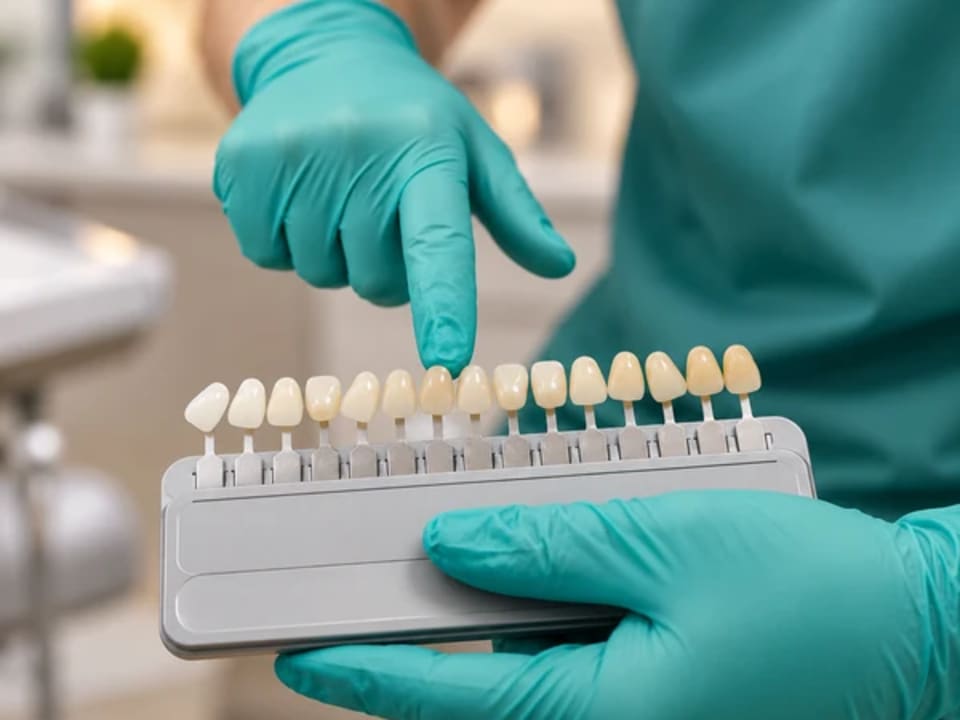
Thin ceramic is affected by what lies underneath it. Try-in pastes imitate different cement shades, sometimes making a subtle but useful change to the result.
Once the appearance and fit are accepted, the tooth has to stay properly isolated. The inner ceramic surface and enamel are conditioned for bonding, resin cement is applied and the veneer is seated. Excess cement around the gum or between teeth is removed before it becomes a future plaque trap.
The bite check comes last. Closing straight down is only half of it; the dentist also watches what happens when the jaw moves sideways and forward. A fraction of unwanted contact can put repeated pressure on the same ceramic edge.
Living With Veneers
A good margin should not feel like a shelf when the tongue passes over it. Floss should move between the teeth without shredding, and the gumline must remain reachable with a toothbrush.
Porcelain dental veneers cannot be eaten away by decay. The supporting tooth can. The risky strip is where ceramic ends and enamel begins, particularly when plaque sits there day after day. This is ordinary home care territory: brush, clean between the teeth and keep review appointments.
Food does not need to become soft forever. Biting thread, opening plastic packets or cracking shells is another matter. Those habits concentrate force on an edge never designed to be a tool. For someone who clenches or grinds at night, a protective guard may be part of maintaining the result.
Years, Not Forever
There is no single figure that fits every patient, and the lifespan of veneers is not an expiry date. Some remain satisfactory for many years. Others need earlier work because of a chip, debonding, gum recession, decay at the margin or a change in the bite.
Ceramic quality matters, but it does not work alone. A large enamel bonding area, stable gums and reasonable loading all improve the outlook. A veneer is reviewed by how it looks, fits and functions - not merely by counting years from the fitting date. The dentist can give an estimate after the examination.