

At a Glance
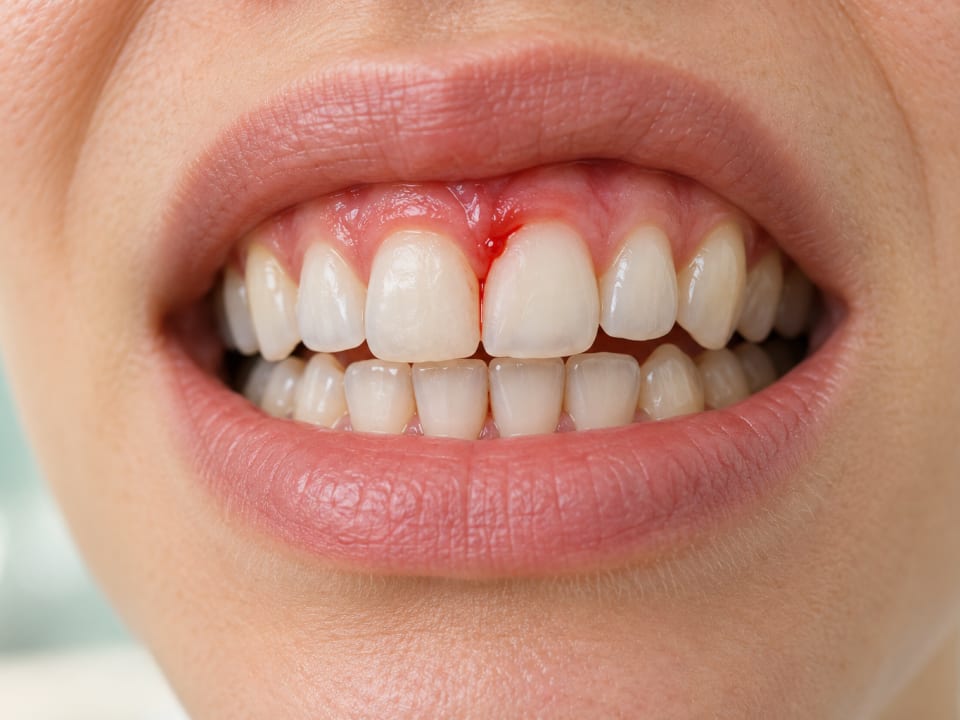
Bleeding gums are most often linked to plaque-related inflammation. Brushing or flossing may simply make the problem noticeable. If bleeding keeps happening, arrange a dental examination.
Until your appointment, continue gentle cleaning. Mouthwash and vitamins cannot replace finding the cause.
Contents
Why Do Gums Bleed?
Soft bacterial plaque builds up along the gumline. When it is not removed regularly, the gums become inflamed: they look red, swell and bleed more easily. This inflammation is called gingivitis. Some deposits eventually harden into tartar, which a toothbrush cannot remove at home.
Gingivitis and Periodontitis: What Is the Difference?
Gingivitis
With gingivitis, inflammation is limited to the gums. They can recover once plaque is removed and daily care improves.
Periodontitis
Periodontitis also damages the tissues that support the teeth. Gum pockets, exposed roots and loose teeth may develop.
Not all gingivitis progresses to periodontitis, but bleeding alone cannot tell you which condition you have.
Why Gums Bleed When Brushing Teeth
Inflammation may be responsible, or the gumline may be injured by a hard brush, excessive pressure or floss snapping against it. Braces, crowded teeth and rough filling edges make cleaning harder and encourage plaque buildup. If bleeding continues despite gentle technique, do not assume the toothbrush is the only cause.
Other Causes of Bleeding Gums
Hormonal changes, including those during pregnancy, and certain medical conditions can affect gum health. Medicines that affect blood clotting may increase bleeding. Less commonly, a clotting disorder or a significant vitamin deficiency is involved. Tell your clinician about your medicines and other symptoms; do not stop prescribed medication yourself.
What Signs Suggest Gum Inflammation?
Alongside blood on your toothbrush or floss, you may notice redness, puffiness, tenderness and deposits around the teeth. Bleeding gums and bad breath often occur together. There may be little or no pain, which does not rule out inflammation.

Children can have inflamed gums too. Repeated bleeding should not be dismissed as a normal part of teething. If brushing hurts or your child’s gums are swollen, see a pediatric dentist.
Bleeding Gums: What to Do at Home
Home care helps control plaque and avoid further injury. It does not replace an examination, particularly when bleeding keeps returning.
- Brush gently. Use a soft toothbrush and fluoride toothpaste twice a day. Clean along the gumline without pressing hard.
- Clean between your teeth. Guide floss carefully without snapping it into your gums. A dentist can help you choose the right interdental brush size.
- Apply gauze to a bleeding spot. Lightly moisten clean gauze with cool water and gently hold it against the area. If bleeding does not stop, seek help.
- Arrange an examination. Notice where and when bleeding occurs, and whether there is pain or swelling. This helps you describe the problem to your dentist.
If your gums bleed between teeth when you first start flossing, continue gentle cleaning. If bleeding persists or cleaning hurts, ask a dentist to check both your technique and your gums.
Which Mouthwash Helps Bleeding Gums?
There is no universal rinse for bleeding gums. Mouthwash cannot remove tartar or correct a filling edge that is injuring the gum. A dentist may recommend an antiseptic, such as chlorhexidine, for a limited period alongside cleaning. Prolonged use can cause tooth staining and changes in taste.
Do not apply undiluted peroxide, alcohol or concentrated homemade mixtures to your gums. Home remedies cannot replace treatment of the cause. Do not give mouthwash to children who cannot reliably spit it out unless their dentist recommends it.
When to See a Dentist
If bleeding recurs, book an appointment even if you have no pain. There is no need to deliberately wait one or two weeks. Painful and bleeding gums, swelling or bad breath are reasons to avoid delaying assessment.
What to Do Depending on the Symptoms
| Sign | What It May Suggest | Next Step |
|---|---|---|
| Bleeding during cleaning | Gum inflammation or injury | Gentle cleaning and a dental appointment |
| Spontaneous or heavy bleeding | The cause and severity need assessment | Seek prompt help; urgently if bleeding does not stop |
| Pain, marked swelling, pus or fever | A possible infection or another acute problem | Urgent dental assessment |
| Unusual bruising, nosebleeds or weakness | A possible cause outside the mouth | Seek medical assessment as well |
When Emergency Care Is Needed
Seek emergency care for heavy bleeding that does not stop with gauze pressure, or bleeding accompanied by dizziness and marked weakness. If swelling makes breathing or swallowing difficult, call emergency medical services immediately.
How Bleeding Gums Are Treated
At a dental consultation, the dentist examines your gums, teeth and mouth lining, looking for deposits and areas of injury. Gum pockets may be measured and X-rays requested when needed. Blood tests are not necessary for everyone; they are recommended when your symptoms or examination suggest a medical cause.
For gingivitis, professional removal of deposits and daily cleaning are the foundations of treatment. Periodontitis may require cleaning below the gumline and further care from a periodontist. A filling or appliance that is injuring the gum is adjusted. Medicines are prescribed when indicated.
Bleeding Gums After Professional Cleaning
Cleaning inflamed areas may be followed by short-lived tenderness and slight bleeding. Follow your dentist’s care instructions. Contact the clinic if bleeding is heavy, does not stop, or pain or swelling increases. Do not assume every episode of bleeding is explained by a recent procedure.
Do Vitamins Help Bleeding Gums?
Bleeding does not automatically mean you lack vitamins. Vitamin C or K deficiency can be a cause, but it cannot be diagnosed from your gums alone. Take supplements on medical advice; they do not remove plaque or treat periodontitis.
How to Reduce Recurrent Gum Bleeding
Brush twice a day and clean between your teeth daily with a suitable tool. An interdental brush should fit without being forced through. For children, the method depends on their age and how their teeth are positioned; adults should help with cleaning.

Agree on check-up and professional cleaning intervals with your dentist. If you wear braces, ask for a demonstration of cleaning around the brackets. Smoking can mask gum bleeding, so an absence of blood does not prove that a smoker’s gums are healthy.
Start with an Examination
At Tooth Fairy in Bila Tserkva, we assess your gums, explain the cause of bleeding and help you choose suitable home care. Treatment is planned after the examination.
Sources
- Chapple ILC et al. (2015). Primary prevention of periodontitis: managing gingivitis.
- AAPD. Periodontal Conditions in Pediatric Dental Patients.
- NIDCR. Periodontal (Gum) Disease.
- NHS. Gum disease.
- MedlinePlus. Bleeding gums.
- European Federation of Periodontology. Gum diseases: FAQs.
- NHS. How and when to use chlorhexidine.
- NHS inform. Taking care of your oral health.
- NHS. How to find an NHS dentist in an emergency.
Images in this article: gingivitis — Onetimeuseaccount, CC0, Wikimedia Commons. interdental brushes — Hondrej, CC BY-SA 3.0, Wikimedia Commons.Images resized where needed and converted to WebP.
At a Glance
Bleeding gums are most often linked to plaque-related inflammation. Brushing or flossing may simply make the problem noticeable. If bleeding keeps happening, arrange a dental examination.
Until your appointment, continue gentle cleaning. Mouthwash and vitamins cannot replace finding the cause.
Contents
Why Do Gums Bleed?
Soft bacterial plaque builds up along the gumline. When it is not removed regularly, the gums become inflamed: they look red, swell and bleed more easily. This inflammation is called gingivitis. Some deposits eventually harden into tartar, which a toothbrush cannot remove at home.
Gingivitis and Periodontitis: What Is the Difference?
With gingivitis, inflammation is limited to the gums. They can recover once plaque is removed and daily care improves. Periodontitis also damages the tissues that support the teeth. Gum pockets, exposed roots and loose teeth may develop. Not all gingivitis progresses to periodontitis, but bleeding alone cannot tell you which condition you have.
Why Gums Bleed When Brushing Teeth
Inflammation may be responsible, or the gumline may be injured by a hard brush, excessive pressure or floss snapping against it. Braces, crowded teeth and rough filling edges make cleaning harder and encourage plaque buildup. If bleeding continues despite gentle technique, do not assume the toothbrush is the only cause.
Other Causes of Bleeding Gums
Hormonal changes, including those during pregnancy, and certain medical conditions can affect gum health. Medicines that affect blood clotting may increase bleeding. Less commonly, a clotting disorder or a significant vitamin deficiency is involved. Tell your clinician about your medicines and other symptoms; do not stop prescribed medication yourself.
What Signs Suggest Gum Inflammation?
Alongside blood on your toothbrush or floss, you may notice redness, puffiness, tenderness and deposits around the teeth. Bleeding gums and bad breath often occur together. There may be little or no pain, which does not rule out inflammation.
Children can have inflamed gums too. Repeated bleeding should not be dismissed as a normal part of teething. If brushing hurts or your child’s gums are swollen, see a pediatric dentist.
Bleeding Gums: What to Do at Home
Home care helps control plaque and avoid further injury. It does not replace an examination, particularly when bleeding keeps returning.
- Brush gently. Use a soft toothbrush and fluoride toothpaste twice a day. Clean along the gumline without pressing hard.
- Clean between your teeth. Guide floss carefully without snapping it into your gums. A dentist can help you choose the right interdental brush size.
- Apply gauze to a bleeding spot. Lightly moisten clean gauze with cool water and gently hold it against the area. If bleeding does not stop, seek help.
- Arrange an examination. Notice where and when bleeding occurs, and whether there is pain or swelling. This helps you describe the problem to your dentist.
If your gums bleed between teeth when you first start flossing, continue gentle cleaning. If bleeding persists or cleaning hurts, ask a dentist to check both your technique and your gums.
Which Mouthwash Helps Bleeding Gums?
There is no universal rinse for bleeding gums. Mouthwash cannot remove tartar or correct a filling edge that is injuring the gum. A dentist may recommend an antiseptic, such as chlorhexidine, for a limited period alongside cleaning. Prolonged use can cause tooth staining and changes in taste.
Do not apply undiluted peroxide, alcohol or concentrated homemade mixtures to your gums. Home remedies cannot replace treatment of the cause. Do not give mouthwash to children who cannot reliably spit it out unless their dentist recommends it.
When to See a Dentist
If bleeding recurs, book an appointment even if you have no pain. There is no need to deliberately wait one or two weeks. Painful and bleeding gums, swelling or bad breath are reasons to avoid delaying assessment.
What to Do Depending on the Symptoms
| Sign | What It May Suggest | Next Step |
|---|---|---|
| Bleeding during cleaning | Gum inflammation or injury | Gentle cleaning and a dental appointment |
| Spontaneous or heavy bleeding | The cause and severity need assessment | Seek prompt help; urgently if bleeding does not stop |
| Pain, marked swelling, pus or fever | A possible infection or another acute problem | Urgent dental assessment |
| Unusual bruising, nosebleeds or weakness | A possible cause outside the mouth | Seek medical assessment as well |
When Emergency Care Is Needed
Seek emergency care for heavy bleeding that does not stop with gauze pressure, or bleeding accompanied by dizziness and marked weakness. If swelling makes breathing or swallowing difficult, call emergency medical services immediately.
How Bleeding Gums Are Treated
At a dental consultation, the dentist examines your gums, teeth and mouth lining, looking for deposits and areas of injury. Gum pockets may be measured and X-rays requested when needed. Blood tests are not necessary for everyone; they are recommended when your symptoms or examination suggest a medical cause.
For gingivitis, professional removal of deposits and daily cleaning are the foundations of treatment. Periodontitis may require cleaning below the gumline and further care from a periodontist. A filling or appliance that is injuring the gum is adjusted. Medicines are prescribed when indicated.
Bleeding Gums After Professional Cleaning
Cleaning inflamed areas may be followed by short-lived tenderness and slight bleeding. Follow your dentist’s care instructions. Contact the clinic if bleeding is heavy, does not stop, or pain or swelling increases. Do not assume every episode of bleeding is explained by a recent procedure.
Do Vitamins Help Bleeding Gums?
Bleeding does not automatically mean you lack vitamins. Vitamin C or K deficiency can be a cause, but it cannot be diagnosed from your gums alone. Take supplements on medical advice; they do not remove plaque or treat periodontitis.
How to Reduce Recurrent Gum Bleeding
Brush twice a day and clean between your teeth daily with a suitable tool. An interdental brush should fit without being forced through. For children, the method depends on their age and how their teeth are positioned; adults should help with cleaning.
Agree on check-up and professional cleaning intervals with your dentist. If you wear braces, ask for a demonstration of cleaning around the brackets. Smoking can mask gum bleeding, so an absence of blood does not prove that a smoker’s gums are healthy.
Start with an Examination
At Tooth Fairy in Bila Tserkva, we assess your gums, explain the cause of bleeding and help you choose suitable home care. Treatment is planned after the examination.
Sources
- Chapple ILC et al. (2015). Primary prevention of periodontitis: managing gingivitis.
- AAPD. Periodontal Conditions in Pediatric Dental Patients.
- NIDCR. Periodontal (Gum) Disease.
- NHS. Gum disease.
- MedlinePlus. Bleeding gums.
- European Federation of Periodontology. Gum diseases: FAQs.
- NHS. How and when to use chlorhexidine.
- NHS inform. Taking care of your oral health.
- NHS. How to find an NHS dentist in an emergency.
Images in this article: gingivitis — Onetimeuseaccount, CC0, Wikimedia Commons. interdental brushes — Hondrej, CC BY-SA 3.0, Wikimedia Commons.Images resized where needed and converted to WebP.

FAQ
Повторну кровоточивість не варто вважати нормальною або автоматично пов’язувати з прорізуванням зубів. Допомагайте дитині обережно чистити зуби й запишіть її до дитячого стоматолога.
What should I do about bleeding gums at home?
Which mouthwash should I use for bleeding gums?
Do vitamins help bleeding gums?
Why do gums bleed after professional cleaning?
What should I do about painful and bleeding gums?
Is it normal for a child’s gums to bleed?
This article is for information only and does not replace a consultation. See a dentist for diagnosis and treatment.