
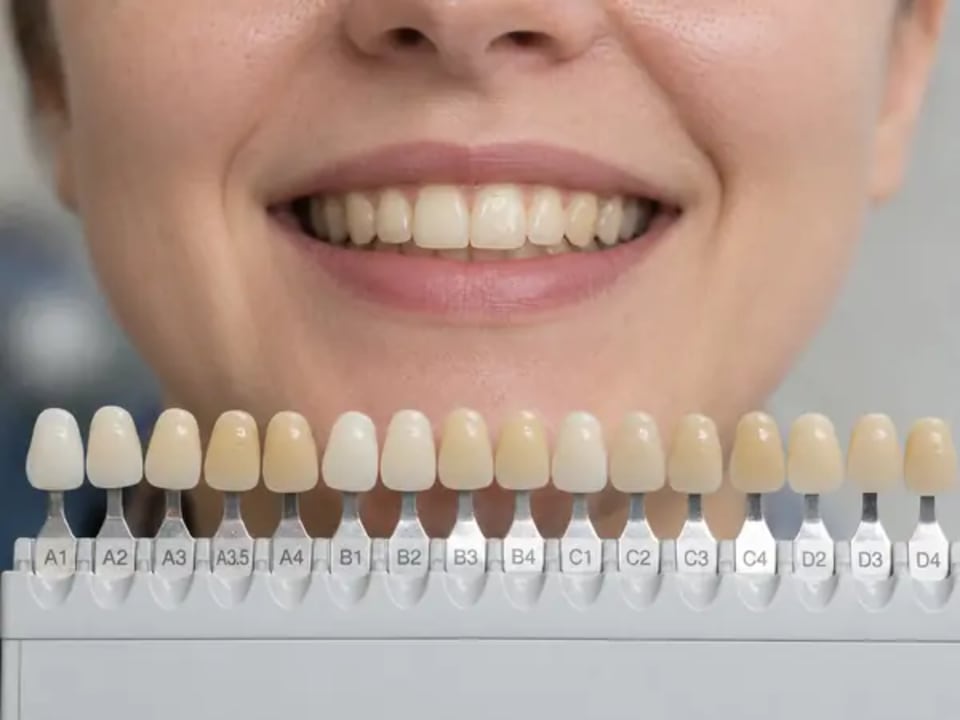
Coffee gets blamed for every dark shade, although the cup is not always guilty. Sometimes there is surface stain. Sometimes the colour sits deeper, inside the tooth. A hygiene appointment deals with the first problem; whitening is meant for the second. With us, the difference is checked before any gel is opened.
First Question: Stain or Tooth Colour?
Run a polishing cup over brown tea stain and it may disappear. Do the same to naturally yellow dentine and very little changes.
Professional cleaning removes plaque, calculus and pigment attached to the outside. Teeth whitening targets darker colour compounds within natural tooth tissue. It does not involve filing enamel or covering the teeth with an opaque white layer.
This is why hygiene may come first. Gel needs a reasonably clean, even surface. If tartar remains near the gum and patches of stain cover the enamel, judging the starting shade—and the result—becomes guesswork.
The Check Before Whitening
One leaky filling can change the plan. So can a crack, an untreated cavity, sore gum tissue or an exposed root that already reacts to cold water.
The dentist inspects those areas and asks about sensitivity before professional teeth whitening. Existing problems are treated first. There is little sense in chasing a brighter shade while one tooth quietly needs a new filling.
Colour history matters as well. Teeth that have gradually yellowed with age or frequent dark drinks often respond differently from a single grey tooth after trauma. Fluorosis, medication-related staining and a tooth that has undergone root canal treatment also require their own assessment.
And then come the crowns. Ceramic, composite fillings and veneers do not join in: they retain the colour chosen when they were made. If a visible filling matches the current shade closely, it may look darker after the natural teeth have been whitened.
Inside the Appointment
The shade is recorded early, while the teeth are still moist. Once enamel has been exposed to air for a while, it dries and appears temporarily lighter—an unhelpful reference for colour planning.
Lips and cheeks are moved away from the working field. The gumline is covered with a barrier so the active product stays on enamel rather than spreading onto soft tissue.
During in-office teeth whitening, gel is placed over the visible tooth surfaces. The application may be divided into several rounds. Between them, the dentist checks the shade and, more importantly, asks how the teeth feel. A patient reporting sharp repeated zings may need a shorter cycle; the protocol is not a contest to see who can tolerate the most.
Allow roughly 60–90 minutes for the visit. The exact time shifts with the professional system used, the number of applications and the response of the teeth.
The first look in the mirror can be misleadingly bright. Teeth lose moisture during the appointment. Over the next few days they rehydrate, and the shade settles. That quieter colour is the meaningful result.
One Gel, Several Limits
Teeth whitening at the dentist has a narrow job: lighten natural dental tissue. It will not make a crooked edge straighter, hide an old opaque filling or persuade a porcelain crown to change shade.
Suppose the front six teeth contain three composite restorations. Whitening may still be possible, but the order matters. First the natural teeth are lightened. Then everyone waits for the shade to settle. Only after that can a dentist accurately match any replacement fillings.
Nor should the target be “as white as the chart allows”. Enamel translucency, the dentine underneath and even the neighbouring teeth affect whether a result looks fresh or oddly artificial. A smile is seen from conversation distance, not only under the treatment lamp.
Those Short Cold Zings
Temporary sensitivity is the most common nuisance around a teeth whitening procedure. It may feel like a quick flash when cold air reaches one tooth, then disappear. Some patients notice almost nothing; others have a restless evening.
Mention existing sensitivity before treatment. The dentist can reconsider the number of cycles, gel contact time or supporting desensitising care. A suitable toothpaste may be recommended before or after the appointment.
One tooth producing sustained, strong pain while the others remain quiet is not a pattern to shrug off. The cause could be a crack, decay or an old restoration that no longer seals well.
The Coffee Question
For the first day, give strong pigments less opportunity. Black coffee, tea, red wine, dark berries and richly coloured sauces can wait. We will specify how long the restriction is needed for the system used.
No, this does not mean a week of rice, cauliflower and plain yoghurt. Choose ordinary food with lighter colouring and avoid turning the short recovery period into a punishment.
Smoking quickly adds new surface pigment. Scrubbing harder afterwards will not compensate for it. Charcoal, soda and coarse powders are especially poor ideas when the teeth are already temporarily sensitive.
Use fluoride toothpaste, brush without aggression and clean the contact points. Unfashionable advice, perhaps. Still useful.
How Long Will the Colour Last?
There is no moment when the result suddenly switches off. The shade moves gradually as new pigment accumulates.
Someone who smokes and sips coffee throughout the working day will notice change sooner than a person with different habits. Regular hygiene matters too. It removes new external stain before deciding whether another whitening course is actually necessary.
Touch-ups are planned after an examination. Repeating strong products simply because twelve months have passed is not a sensible calendar rule.